A Performative Ecology for Posthumanist Cities (NL/EN)
Hans Kalliwoda
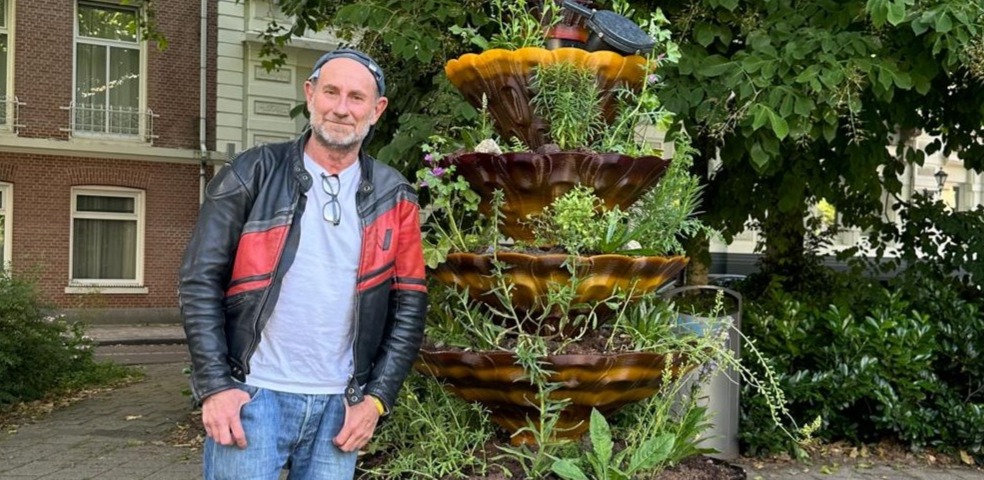
In zijn lezing neemt kunstenaar-onderzoeker Hans Kalliwoda je mee in zijn urgente, verbeeldingsvolle verkenning van hoe steden ontworpen kunnen worden mét in plaats van tegen de meer-dan-menselijke wereld.
Op het snijvlak van kunst, wetenschap en stedelijke ecologie presenteert Kalliwoda in A Synergy Between Art and Science Through Public Space Interventions – Interbeings: A Performative Ecology for Posthumanist Cities een performatief raamwerk voor stedelijke interventies dat de antropocentrische blik op stadsontwikkeling ter discussie stelt. Via zijn langlopende project RefuBees schetst hij een toekomst waarin steden actief ruimte creëren voor wilde bestuivers — niet uit nostalgie naar een verloren natuur, maar als een radicale herdefinitie van wie deel uitmaakt van het stedelijk weefsel. Zijn aanpak koppelt artistieke verbeelding aan ecologische precisie en resulteert in installaties die zowel symbolisch als effectief zijn, diep geworteld in lokale biodiversiteit en collectieve betrokkenheid.
In deze lezing introduceert hij het concept Interbeings: entiteiten die ontstaan uit samenwerking tussen menselijke en niet-menselijke actoren, en pleit hij voor hun erkenning als onderdeel van een nieuw, posthumanistisch stedelijk gemeengoed. Geïnspireerd door performatieve ecologie, systeemdenken en planetaire verantwoordelijkheid, ontvouwt Kalliwoda een toekomstvisie die zowel visionair als praktisch toepasbaar is.
Dit is geen oproep tot greenwashing of cosmetische duurzaamheid, maar een provocatie: hoe kunnen steden werkelijk gastvrij worden voor leven dat niet menselijk is?
Ruigoord atelierhouder Hans Kalliwoda (München) is kunstenaar, onderzoeker en co-directeur van het Urban Ecology Lab (TU Delft) en mede oprichter van de BlindPainters Foundation. Met zijn project RefuBees werkt hij aan performatieve interventies in de publieke ruimte waarin kunst, ecologie en systeemdenken samenkomen. Zijn installaties, zoals de BeeTotems, creëren ruimte voor intersoortelijk samenleven in de stad. Kalliwoda werkt op het snijvlak van artistieke verbeelding en ecologische urgentie, met oog voor biodiversiteit, participatie en toekomstgericht denken. Zijn werk werd internationaal gepresenteerd en verenigt kunst, wetenschap en activisme in de zoektocht naar nieuwe stedelijke ecologieën voorbij het antropoceen. Hij woont en werkt tussen Nederland, Duitsland en andere tijdelijke habitats.
Dit evenement vond plaats tijdens het festival in september 2025.
In his lecture, artist-researcher Hans Kalliwoda takes us on an urgent and imaginative exploration of how cities might be designed with, rather than against, the more‑than‑human world.
Working at the intersection of art, science, and urban ecology, Kalliwoda presents a performative framework for urban interventions that challenges the anthropocentric lens in city-making. Through his long-term project RefuBees, he envisions cities that actively create space for wild pollinators — not as a nostalgic yearning for nature, but as a radical redefinition of who belongs to the urban fabric. His approach merges artistic imagination with ecological precision, resulting in installations that are both symbolic and effective, deeply rooted in local biodiversity and collective engagement.
In this lecture, he introduces the concept of Interbeings: entities emerging from collaborations between human and non-human actors, and argues for their recognition as part of a new, posthumanist urban commons. Inspired by performative ecology, systems thinking, and planetary responsibility, Kalliwoda offers a vision of the future that is both visionary and practically applicable.
This is not a call for greenwashing or cosmetic sustainability, but a provocation: how can cities truly become hospitable to life that is not human?
Ruigoord artist, Hans Kalliwoda (Munich) is an artist, researcher, and co-director of the Urban Ecology Lab at Delft University of Technology and co-founder of the BlindPainters Foundation. Through his RefuBees project, he develops performative interventions in public space where art, ecology, and systems thinking converge. His installations, such as the BeeTotems, create space for interspecies coexistence in urban environments. Kalliwoda operates at the intersection of artistic imagination and ecological urgency, with a focus on biodiversity, participation, and future-oriented design. His work has been presented internationally and bridges art, science, and activism in the search for new urban ecologies beyond the Anthropocene. He lives and works between the Netherlands, Germany, and other temporary habitats.
This event took place during the festival in September 2025.